
Das freundliche Reiseziel Tegalrejo wird dich verzaubern
GenieĂe die Kultur und weitere Vorteile von Tegalrejo. Diese freundliche und romantische Stadt lockt Besucher durch Wellness und ihre Bars an. In einem Feriendomizil kannst du dich auch im Urlaub wie zu Hause fĂŒhlen â viele bieten eine voll ausgestattete KĂŒche und einen Grill, damit du dich bequem selbst versorgen kannst.
Sightseeing in und um Tegalrejo
Bist du auf der Suche nach den besten AktivitĂ€ten in der Gegend? Breche von deiner Ferienunterkunft auf und erkunde, was Tegalrejo zu so einem einzigartigen Urlaubsziel macht. Dies sind einige der Top-Attraktionen, die es in der Umgebung zu sehen gibt, â alle im Umkreis von 48 km vom Stadtzentrum:
- Zoo Gembira Loka (5,2 km)
- Jogja Bay (7,6 km)
- Kids Fun Park (10,7 km)
- Merapi Golf Course (20,2 km)
- Svargabumi Borobudur (25 km)
- Adisucipto Golf Course (Golfplatz) (8,7 km)
Erkundung der Naturlandschaft von Tegalrejo
Ganz gleich, ob du ein Abenteuerurlauber bist oder einfach nur die Landschaft genieĂen möchtest, in Tegalrejo wirst du sicher die perfekte Kulisse fĂŒr deinen Urlaub im GrĂŒnen finden. Hier sind ein paar der spektakulĂ€rsten Attraktionen, alle innerhalb von 48 km vom Stadtzentrum:
- Alun Alun Kidul (3,7 km)
- Lapangan Karang Kotagede (6,5 km)
- Svargabumi Borobudur (25 km)
- Tegaldowo Puspa Gading Park (10,4 km)
- Wasserfall Sri Gethuk (23,4 km)
- Suroloyo Peak (24,4 km)
Transportoptionen nach und rund um Tegalrejo
Der nĂ€chstgelegene Flughafen liegt in Flughafen Adisucipto Intl. (JOG), 8,8 km vom Stadtzentrum entfernt. Wenn du fĂŒr deinen Reiseplan keinen Flug finden kannst, solltest du vielleicht nach Flughafen Yogyakarta Intl. (YIA) fliegen, das 35,3 km entfernt ist.
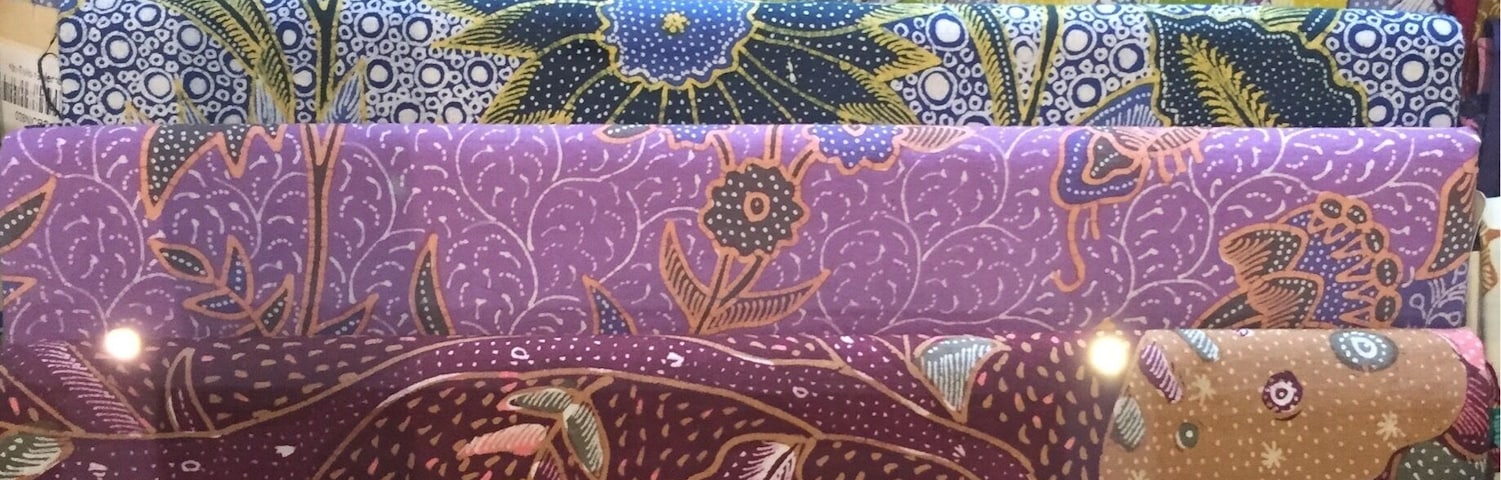
![Batik (Javanese pronunciation: [ËbateÊ]; Indonesian: [ËbatÉȘk]) is a technique of wax-resist dyeing applied to whole cloth, or cloth made using this technique. Batik is made either by drawing dots and lines of the resist with a spouted tool called a canting (IPA: [ÊÍĄÊantiĆ], also spelled tjanting), or by printing the resist with a copper stamp called a cap (IPA: [ÊÍĄÊap], also spelled tjap). The applied wax resists dyes and therefore allows the artisan to color selectively by soaking the cloth in one color, removing the wax with boiling water, and repeating if multiple colors are desired.
A tradition of making batik is found in various countries, including Nigeria, China, India, Malaysia, Philippines and Sri Lanka; the batik of Indonesia, however, is the most well-known. Indonesian batik made in the island of Java has a long history of acculturation, with diverse patterns influenced by a variety of cultures, and is the most developed in terms of pattern, technique, and the quality of workmanship. On October 2009, UNESCO designated Indonesian batik as a Masterpiece of Oral and Intangible Heritage of Humanity.
Source: Wikipedia
These batik clothes are sold at one of the high end hotel's gift shop in Yogyakarta. They are hand drawn and painted and hence command a high price! It ranges over US$200 although some cheap batik at the market can be found for a mere US$2. The difference lies in the quality, the design and also the amount of skill that's needed to make them.
Common batik wear are made from cotton. The ones shown here are silk and limited in quantity produced.
Yogyakarta and Surakata (Solo) are two cities where batik originated in Indonesia.
#unesco](https://images.trvl-media.com/place/1718/09cd56ac-2be9-4518-ac77-e217d037b46b.jpg?impolicy=resizecrop&rw=1920&ra=fit&ch=480)


